Budget 3.0 – What it will mean for SA Businesses: Mandatory E-Invoicing and VAT Reform by 2028
As South Africa heads into round 3 of its National Budget discussions (i.e. Budget 3.0), there’s growing attention on how the government plans to strengthen its fiscal position in the absence of a VAT rate increase. In a move that brought relief to households and businesses alike, the South African National Treasury officially scrapped the proposed 1% VAT hike on April 24, 2025.
The decision to cancel the increase was welcomed by many, but it does leave the government with a significant revenue gap to fill.
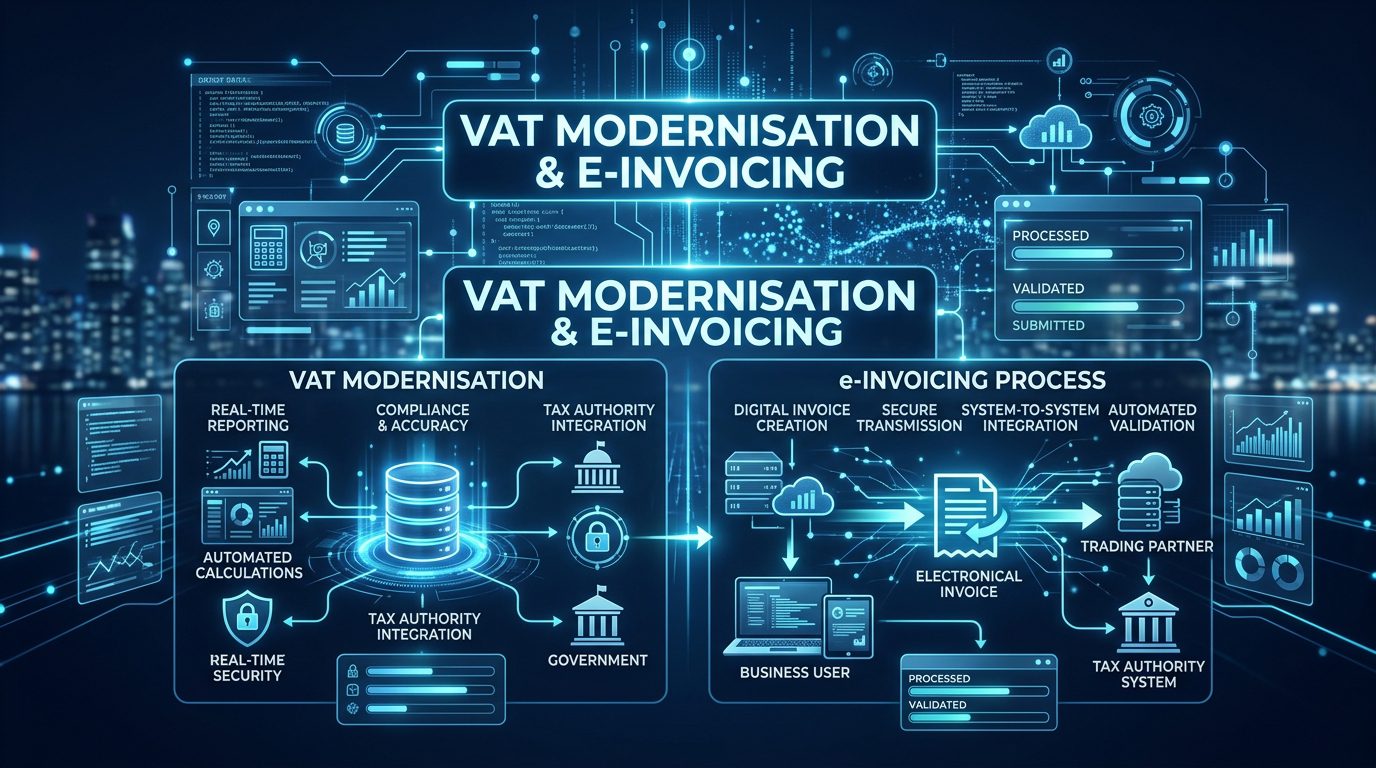
As an alternative for boosting revenue, the South African Revenue Service (SARS) is moving ahead with a more structural and long-term solution: the rollout of mandatory e-invoicing and real-time VAT reporting by 2028.
A Digital Tax Revolution by 2028
Mandatory e-invoicing is poised to be one of the most significant tax reforms in South Africa’s history. SARS first opened the conversation with the release of a discussion paper in September 2023, inviting feedback from businesses and software providers. The next major milestone is expected in late 2025, when SARS is due to launch a second public consultation focused on the technical and legal requirements of the upcoming framework.
This shift is more than just a compliance change—it’s a strategic move aimed at:
-
- Closing the VAT gap (estimated around R50 billion annually),
-
- Reducing invoice fraud and manipulation, and
-
- Increasing overall tax transparency and efficiency.
For rollout, SARS may consider a Peppol-based 5-corner model, which would enable real-time communication between businesses and SARS themselves.
Why Now? The Cost of Delay and the Opportunity for Transformation
With the VAT increase off the table, e-invoicing becomes not only a compliance matter, but also a vital component of national revenue strategy. It’s crucial for South African businesses to view this reform not as a distant problem for 2028, but as an immediate digital transformation opportunity.
Businesses that had already updated pricing models, billing systems, and VAT documentation in anticipation of the now-cancelled VAT hike will need to redirect their efforts. Instead of focusing on rate changes, energy should shift toward:
-
- Investigating current invoicing and ERP systems
-
- Exploring e-invoicing solutions that support real-time VAT reporting
-
- Training finance and compliance teams on the upcoming changes
Let VAT Modernisation SA Help You Get E-Invoicing Ready
At VAT Modernisation SA, we make e-invoicing easy. Our tailored solutions help South African businesses:
-
- Understand the evolving VAT landscape
-
- Achieve compliance with SARS’ upcoming mandates
-
- Transition seamlessly without overhauling existing systems
Our expert team is ready to guide you through each step of the process—from initial assessment to full implementation. Whether you’re a small business or a large enterprise, VAT Modernisation SA has the tools and experience to ensure you’re not just ready for 2028—but ahead of the curve.
Reach out to us today to start your journey toward VAT compliance and digital tax transformation.
Final Thoughts
As the South African government seeks sustainable alternatives to bolster tax revenue, mandatory e-invoicing and real-time VAT reporting represent a significant shift. While the withdrawal of the VAT increase provides temporary relief, businesses that prepare early for the new, upcoming VAT compliance framework will be best positioned to navigate the coming changes—and benefit from improved operational efficiency along the way.
Now is the time to act. Don’t wait until 2028. Start assessing your systems and planning your e-invoicing roadmap today.