SARS Modernisation 3.0: What South African Businesses Should Be Preparing for Now
VAT Modernisation is moving out of “future project” territory and into execution.
Recent media coverage, driven by SARS’s Modernisation 3.0 strategy, is a signal that the conversation is changing. The question is no longer whether VAT reporting will become more structured and data-driven. It’s how quickly finance teams can prepare their systems and operations for that new level of visibility.
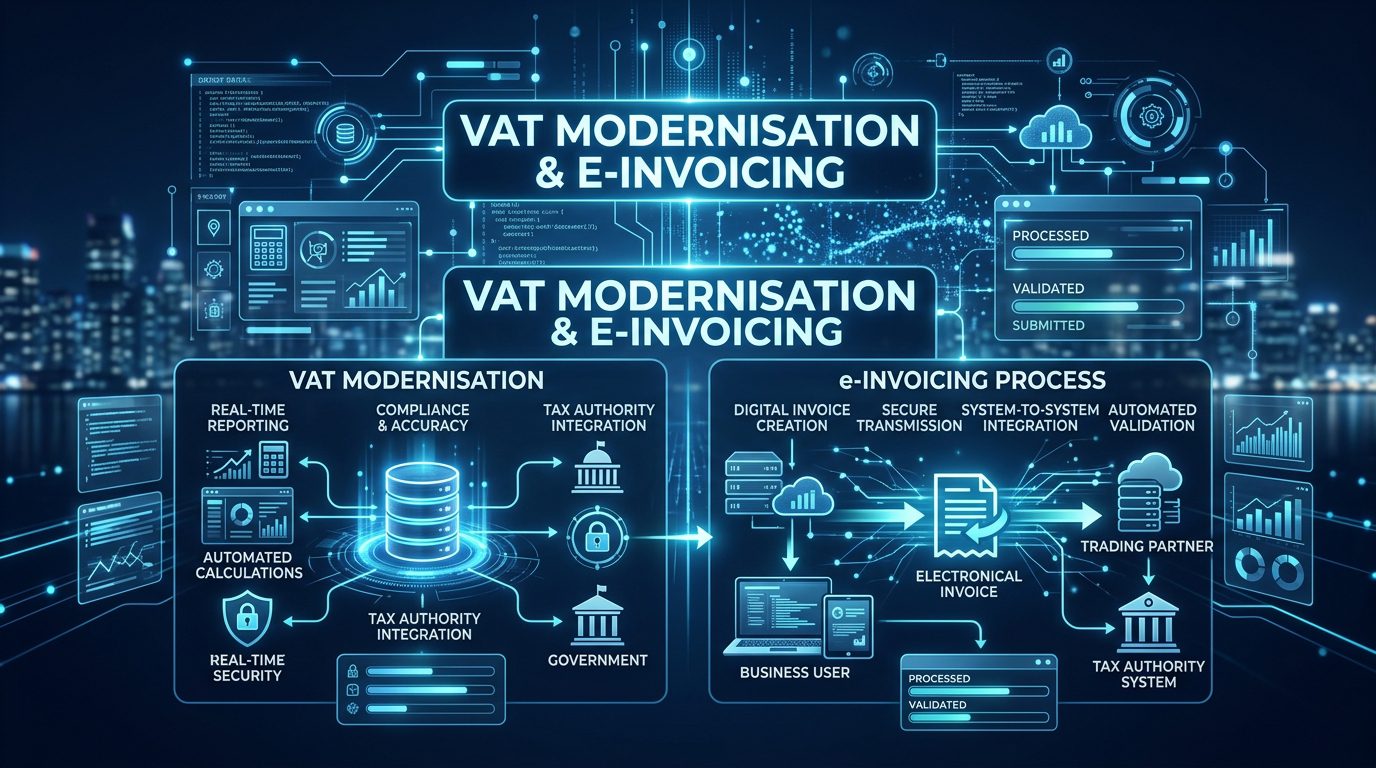
SARS Modernisation 3.0 is the broader push to modernise tax administration. VAT Modernisation is one of the major projects inside that strategy, and it carries a clear direction: more structured invoice data, more automated data flows, and far less tolerance for “we’ll fix it later.”
SARS Modernisation 3.0 – What’s changing, in practical terms
VAT compliance has traditionally been managed in cycles. Data is captured, cleaned, reconciled, reviewed, and filed. Teams often find and fix issues during that cycle.
The VAT Modernisation direction changes the order of operations. When invoicing becomes more structured and data flows become more direct, accuracy moves upstream. The emphasis shifts from correcting errors later to preventing them at the point of creation.
That is why the preparation conversation cannot wait for final technical rules. The hardest part of this transition is not a specification document. It is what happens inside your finance workflows every day.
Why “wait and see” is risky
In theory, waiting sounds rational. In reality, it compresses work that takes months into an emergency project.
E-invoicing and structured VAT reporting expose what finance teams have previously been able to manage quietly. Free-text workarounds. Missing tax codes. Inconsistent customer and vendor records. Manual approvals that live in inboxes. Those gaps become blockers when structured formats and validation become a baseline expectation.
One of the most useful insights from international businesses that have already been through e-invoicing adoption is that success is rarely determined by the go-live date. It is determined by operational discipline.
According to Girish Songirkar, Delivery Manager at Arionerp:
“The transition to e-invoicing is usually sold as a way to save paper, but that’s missing the point. The real value is the forced discipline it brings to your financial data. It’s a multi-year journey. The teams that actually succeed are the ones that care more about data integrity than hitting an arbitrary go-live date.”
That lesson applies locally. South African businesses that use the runway to clean up data and tighten workflows will have a very different experience from those who wait until frameworks are final and pressure is high.
What preparation really means
Preparation is not a compliance checklist. It is an operational upgrade that reduces friction, strengthens controls, and makes finance data reliable from the moment it is created.
Here are the three preparation moves that matter most.
1. Treat it as a master data programme first
Many organisations approach e-invoicing like a plug-in. That approach fails quickly if master data is inconsistent.
For South African finance teams, this translates into a practical starting point: review customer and supplier master data, VAT number validation approaches, and how consistently tax codes and required fields are enforced.
2. Move checks upstream, before finance becomes the clean-up team
Structured invoicing has a simple consequence: missing fields and inconsistent treatment stop being “fixable later.”
Abhinav Gupta, Founder of Profitjets, described exactly what happens when e-invoicing forces this change:
“When we first looked at e-invoicing, everyone assumed it was a tech upgrade driven by regulation. In reality, it forced us to confront how messy our day-to-day finance operations actually were.
To make it work, we had to move responsibility upstream. Sales ops and procurement suddenly mattered a lot more to finance. We made the rules for creating invoices stricter, locked down required fields, and added validations at the time of entry instead of waiting to fix things at the end of the month. That shift created friction at first, because flexibility was replaced with discipline.
The surprise was how much better things got once the dust settled. Exceptions dropped. Disputes reduced. Reconciliation sped up. Month-end close became calmer without adding people or effort.”
That’s the point South African businesses need to internalise now. The work shifts upstream. Finance can’t be the last line of defence after the fact. Controls need to run earlier, and validations need to be embedded at entry.
3. Redesign workflows around exceptions, not manual handling
A major operational change that comes with e-invoicing is that teams stop touching every document. That is not a technology change. It is a working model change.
Manual review and scattered approval communications is replaced with built-in validation and automated highlighting of exceptions.
This is where the practical relevance of e-invoicing really stands out. E-invoicing supports AR and AP automation by centralising documents and workflows, reducing manual touchpoints, and surfacing exceptions early with context. That is the kind of operational structure that becomes essential when compliance is increasingly system-driven.
VAT Modernisation is an opportunity, if you prepare operationally
VAT Modernisation is part of SARS Modernisation 3.0. It is not a single technical update that finance teams can address at the end of the cycle. It is a shift in how compliance is achieved, with increased reliance on structured data and stronger controls at the point of creation.
South African businesses do not need to wait for final technical rules to start preparing. The most valuable preparation work is already clear: clean data, consistent processes, upstream validations, and exception-led workflows.
The businesses that start now will not only be more ready for SARS. They will have cleaner finance operations, better visibility, and teams that spend less time fixing avoidable problems after the fact.